
You are emptying a garage, an attic, or an apartment after a move. The boxes are piling up, and one question keeps coming back: what to do with everything that still works but that you no longer need? Clearing and donation associations allow these items to be redistributed to people in need while reducing the volume of waste sent to landfills. However, you need to know who to contact, what is accepted, and how to handle refusals.
Suspended textile donations and refused items: preparing a realistic clearance
Before loading your car, there’s a reflex to adopt: call the targeted organization to check what they accept at the precise moment of your action. The guidelines change, sometimes from one day to the next.
In the Pyrénées-Atlantiques, for example, Emmaüs has temporarily suspended the reception of donations due to the influx of clothing. Some textile collection bins have been removed or taken out of service in several municipalities. Textile donations can even be suspended by reuse organizations. The crisis in the textile sector, linked to the overproduction of low-cost clothing, is undermining the entire associative collection.
In practice, you may find yourself with bags of clothing that no one wants. What to do in this case? Here are a few local options to explore:
- Contact your municipal waste disposal center: some have textile bins managed by approved operators, independent of saturated associations.
- Look for a recycling center or resource center nearby that still accepts textiles, even temporarily, for sorting and solidarity resale.
- Offer the items in good condition on peer-to-peer donation platforms, where pickup is done directly from your home.
The idea is not to abandon donations, but to have a plan B. A well-organized clearance anticipates several channels, not just one.
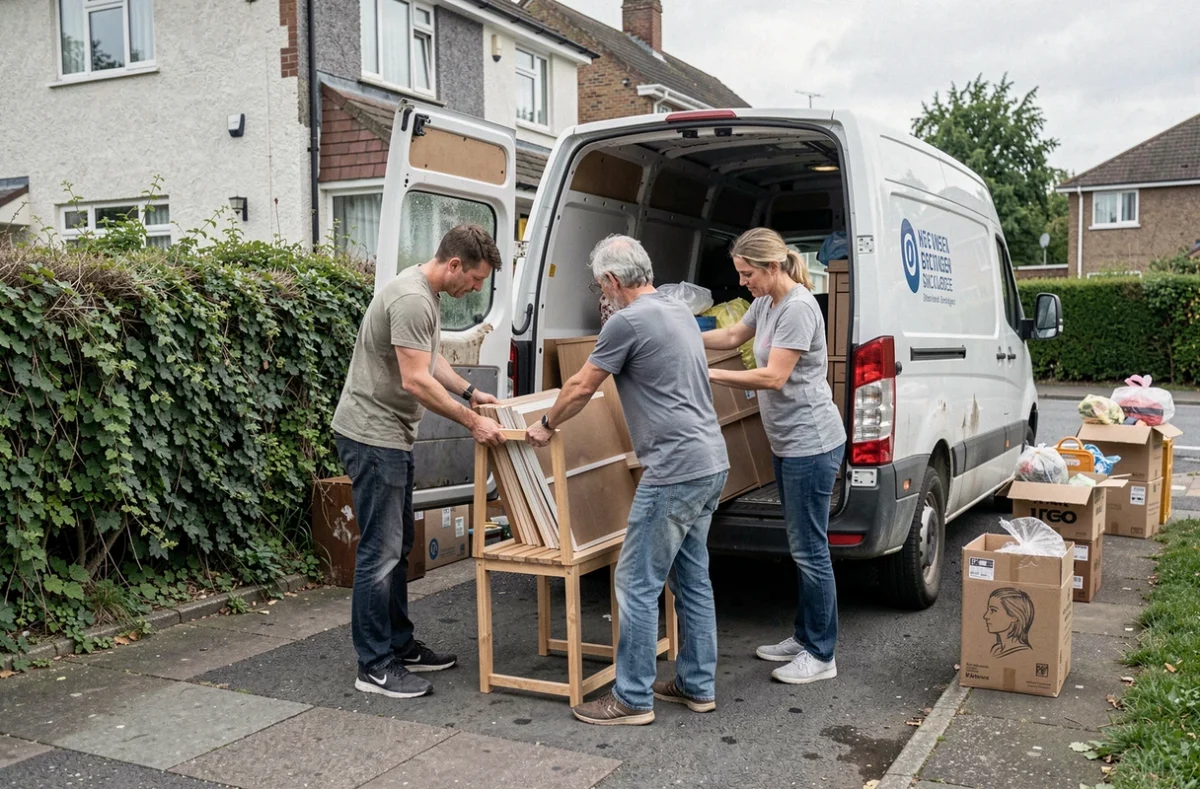
Recycling centers and clearance associations: what they really accept
You may have noticed that the lists of accepted items vary greatly from one association to another? That’s normal. Each organization sells in solidarity shops what it collects. If an item doesn’t find a taker, it becomes a storage cost, then waste.
The basic rule is simple: an item donated must be clean, complete, and functional. Recycling centers like Le Bon Débarras clearly state this. Dishes, books, decorations, toys, small appliances, sports equipment, small furniture, lamps: the list is broad, provided that each item is in usable condition. Most associations do not carry out repairs and do not do consignment sales.
For large furniture in good condition, some Emmaüs structures or local associations offer home pickup depending on the region. Online resources, such as the Concept Habitat website, detail the different options to direct your donations to the right organization.
A less obvious point concerns damaged items. For the Great Solidarity Toy Collection, Ecomaison specifies that incomplete or broken toys are accepted by partner associations, which sort and restore them when possible. The others go for recycling. An unusable item is therefore not always waste, but you need to find the appropriate collection.
Sorting before donation: the method that avoids back-and-forth
The classic trap: arriving at a recycling center with a full trunk and leaving with half of it, due to not having sorted beforehand. A few minutes of preparation at home can change everything.
Separate your items into three categories before contacting an association. The first includes what is in good condition and functional: furniture, dishes, complete toys, clothing without stains or tears. This is the priority lot for donation to a recycling center or solidarity shop.
The second category includes what is damaged but repairable or recyclable. Broken appliances, damaged toys, worn textiles. These items require a specific channel: occasional collections like Ecomaison, recycling bins at waste disposal centers, or associations specialized in repair.
The third category consists of true waste. Stained mattresses, furniture made of particle board swollen by humidity, non-functional electronic devices. These items belong in the waste disposal center, not for donation. Bringing them to an association imposes an elimination cost that it cannot absorb.
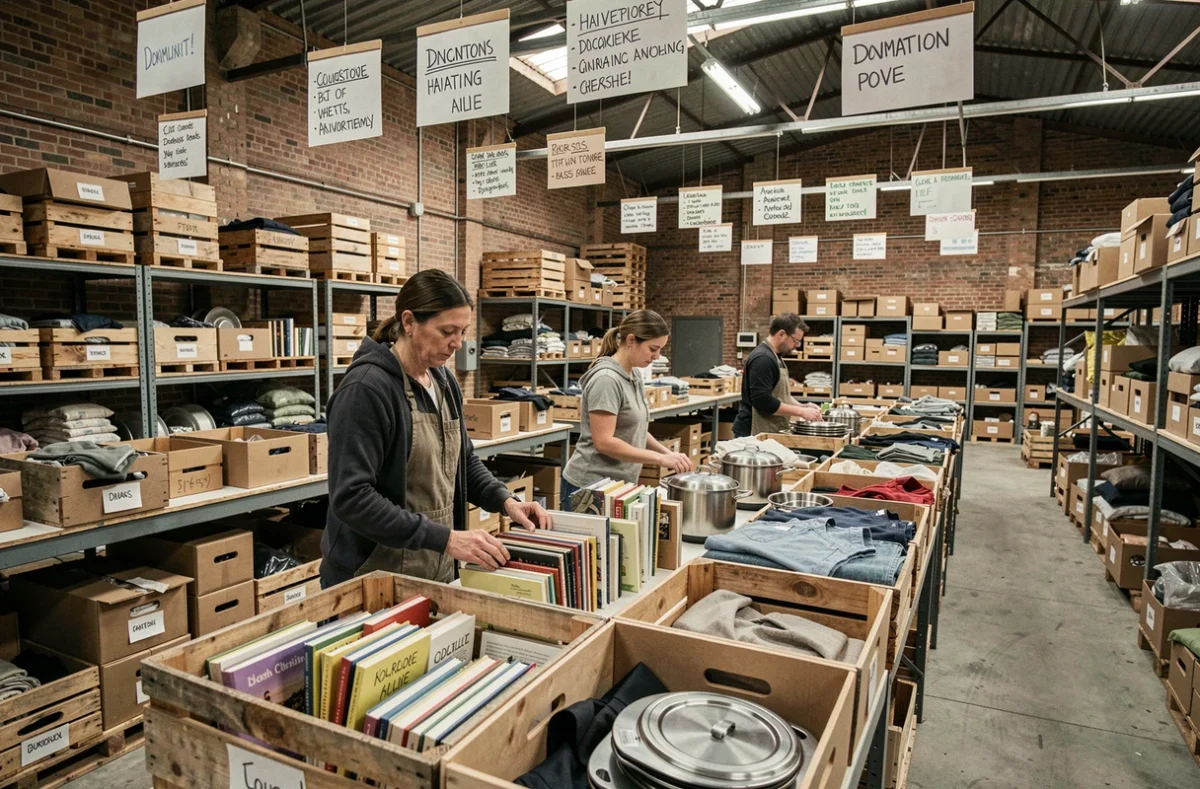
Solidarity reuse: what your donation concretely changes
Donating to a reuse association produces a double effect. The first is environmental: each piece of furniture, each reused appliance avoids the production of a new item and the disposal of an old one. The second is social. Solidarity shops allow people with modest incomes to equip themselves at reduced prices.
Emmaüs remains the best-known player in this network. But dozens of local recycling and resource centers fulfill the same role, often with teams in professional integration. Your donation finances both reuse and solidarity employment.
The public response is also evolving towards increased support for these sectors, particularly through the reform of extended producer responsibility (EPR) on textiles. The stated goal is to better finance collection and sorting, so that associations no longer find themselves alone facing unmanageable volumes.
Giving a second life to your items is not just about dropping boxes in front of a door. It involves sorting beforehand, a call to check the guidelines, and sometimes a plan B when the usual channel is saturated. Anticipating these steps ensures that your donation truly reaches its destination.