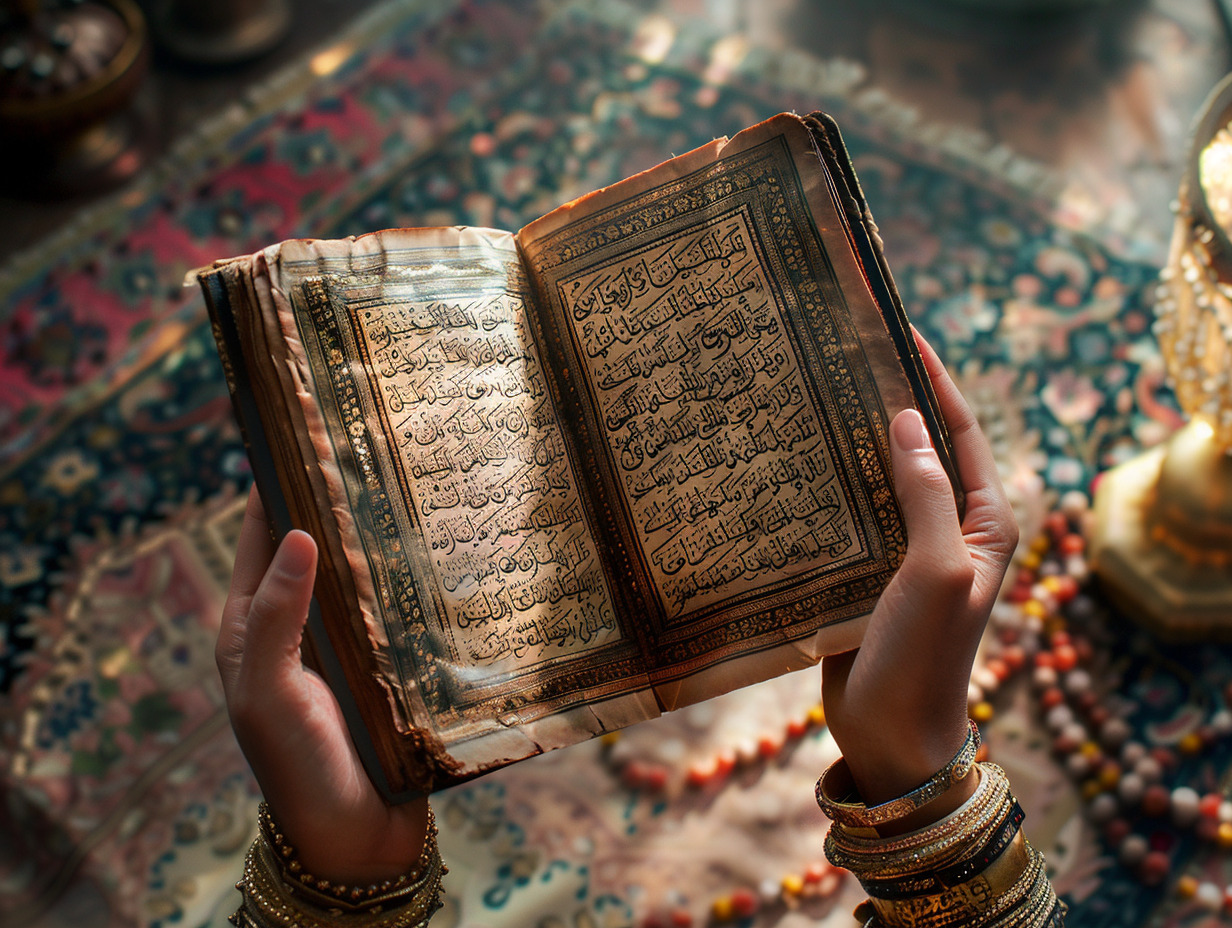
The Quran, the sacred text of Islam, fascinates with its unique structure and varied length. Composed of 114 surahs, or chapters, it presents an organization that differs from classical religious writings. Each surah varies in length, ranging from a few verses to over 200, and this diversity intrigues both believers and scholars.
The order of the surahs does not follow the chronology of revelation or a linear thematic progression, but seems to obey an internal logic specific to interpretation. This particular arrangement invites careful and repeated reading to grasp the nuances and profound messages of the text.
The structure of the Quran: organization and composition
The Quran, the sacred writing of Muslims, is distinguished by its composition of 114 surahs of unequal length. Each surah, a fundamental textual unit, consists of phrases called aayah, meaning ‘a sign’. This internal organization invites a deep exploration to understand the richness of the Quranic text.
Main surahs and their arrangement
- Fatihah: the first surah of the Quran, often recited during prayers.
- Al-Baqara: the longest surah, recounting notably the story of Moses and the cow.
The Fatihah, short but essential, opens the Quranic corpus with seven verses. In contrast, Al-Baqara spans 286 verses, offering narrative and legislative diversity. This juxtaposition of short and long surahs gives the Quran a unique dynamic.
How many pages are in the Quran?
The question ‘how many pages are in the Quran’ finds answers according to different formats and editions, but typically, the complete text extends over about 600 pages. This variability reflects the richness and depth of a text studied from multiple angles: theological, linguistic, and historical-critical.
The length of the Quran: analysis of the surahs and verses
The analysis of the length of the surahs and verses of the Quran reveals remarkable diversity. The sacred text, composed of 114 surahs, presents significant variations in terms of length, ranging from a few verses to several hundred. This structural diversity offers a rich and complex framework for theological and linguistic study.
Distribution of the surahs
| Surah | Number of verses |
|---|---|
| Al-Baqara | 286 |
| Al-Kawthar | 3 |
The longest surah, Al-Baqara, spans 286 verses and addresses various topics, including the story of Moses and the cow. In contrast, the shortest, Al-Kawthar, contains only three verses. This disparity in length contributes to the narrative and doctrinal richness of the Quranic text.
Verses and their meaning
Each surah is composed of verses called aayah, meaning ‘a sign’. These signs, through their structure and content, convey divine messages. Consider the surah Al-Baqara, where Moses, a major prophetic figure, commands the sacrifice of a cow, symbolizing obedience and faith in God. This narrative, rich in teachings, illustrates the pedagogical approach of the Quran.