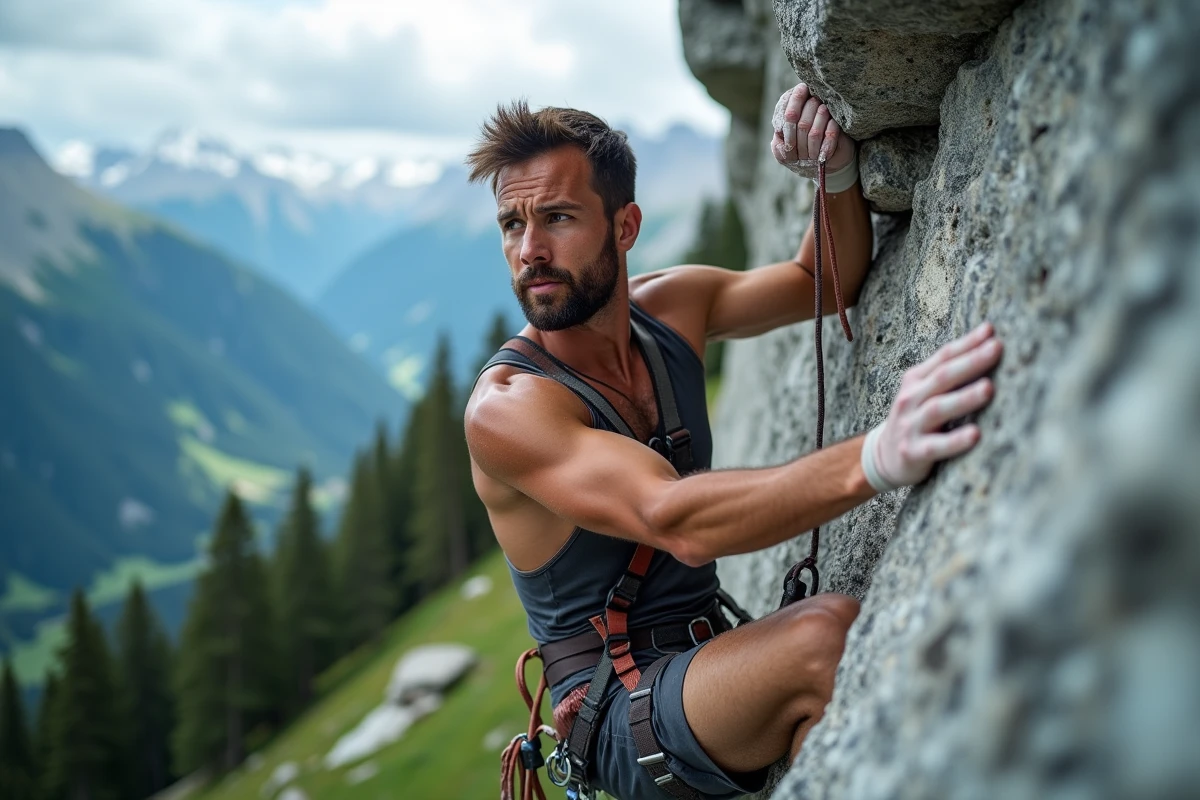
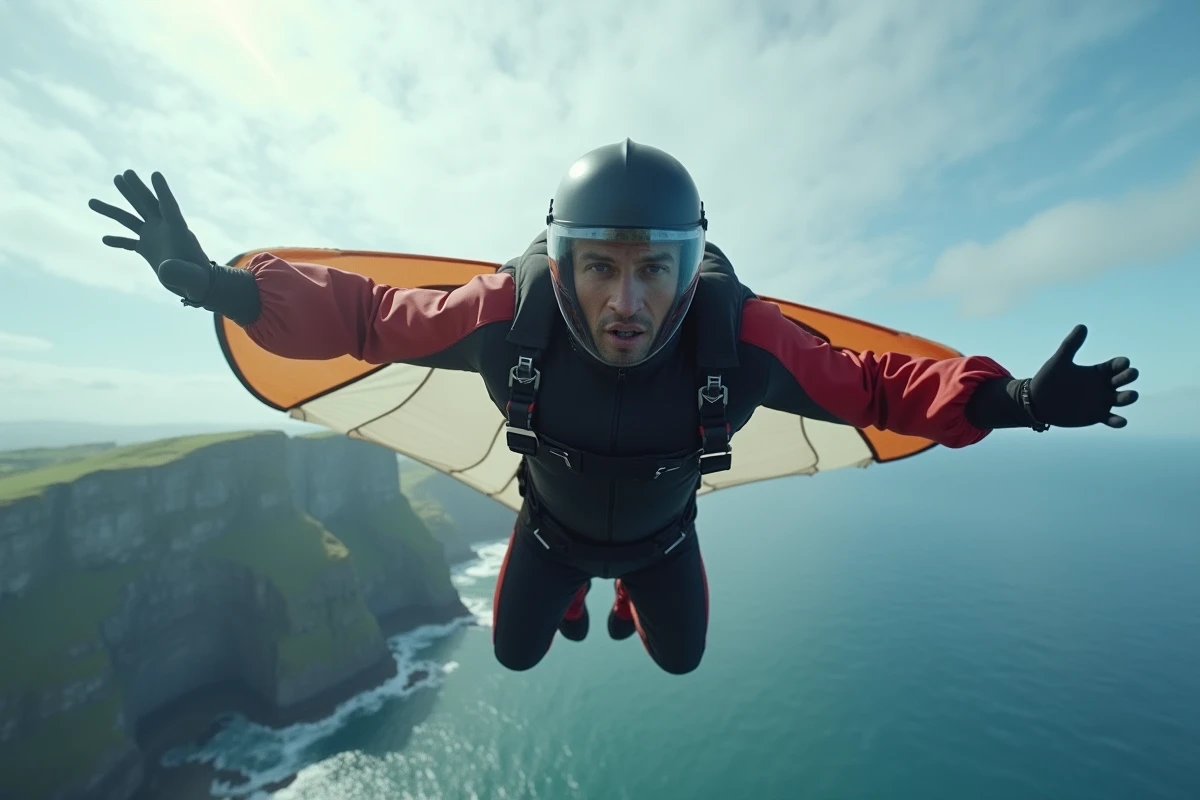
A first tandem parachute jump where the instructor manages the canopy while you manage your breath. A downhill mountain biking descent on a rutted trail after three days of rain. These situations share a common point: you do not push your physical limits by willpower, but by the ability to read the terrain and prepare your body for the real constraints of an extreme sport.
Mental preparation in extreme sports: the underestimated lever
On an exposed via ferrata or before a bungee jump, the first limiting factor is not muscular strength. It is the management of fear at the moment when the body freezes.
Mental preparation is now presented as a lever as crucial as physical condition for progressing in high-adrenaline activities. We talk about stress management, fear, and decision-making in exposure situations, not just motivation.
This involves controlled breathing exercises before each attempt, visualizing the technical gesture (the jump, the release, the commitment to a slope), and regular work on internal dialogue. Practitioners who progress the fastest train to recognize the difference between useful fear and parasitic fear.
Documented resources on this approach can be found, particularly on the Ultra Sport website, which lists disciplines where this mental dimension is an integral part of progression.

Feedback varies on this point, but several practitioners confirm that a visualization session of a few minutes before a parachute jump or a canyoning session significantly reduces the feeling of blockage when committing.
Physical condition tailored to adventure sports: what we really work on
It is often thought that one must be a complete athlete to engage in an extreme sport. In reality, each discipline requires very specific physical qualities, and training without targeting these qualities is a waste of time.
Core stability and proprioception before power
For surfing, river kayaking, or downhill mountain biking, the priority is not brute strength. It is the ability to stabilize the torso in unstable situations. Good dynamic core stability (plank with arm movements, exercises on unstable surfaces) prepares you better than a series of heavy squats.
Proprioception, that is, the fine perception of the body’s position in space, is worked on balance boards or simply barefoot on uneven terrain. This ability makes a difference when negotiating a technical passage in climbing or a rapid in kayaking.
Specific endurance and recovery
A canyoning outing often lasts several hours with sequences of walking, swimming, rappelling, and carrying. The cardio required is not that of a long-distance runner, but rather interval endurance with short, intense efforts interspersed with active phases.
- Short intervals (sprint repetitions followed by active recovery) to simulate the jolts of a whitewater course or a downhill mountain bike run
- Shoulder and forearm strengthening for pulling activities (climbing, via ferrata, rappelling)
- Dynamic stretching before the outing and passive stretching afterward, to limit muscle cramps related to unusual positions
Muscle recovery is a subject in its own right. After a day of extreme activity, the body needs sufficient hydration, extended sleep time, and sometimes appropriate supplements to reduce inflammation.
Insurance and supervision: terrain constraints to anticipate
Not enough is said about what happens before jumping into the void. The logistics of an extreme sport start with checks that condition safety and coverage in case of an accident.
The majority of home or liability insurance contracts exclude high-risk sports. Paragliding, scuba diving, mountaineering, caving: these activities often appear in exclusion clauses. If you practice regularly, specific insurance with the relevant federation or a specialized insurer is necessary.
On the supervision side, the trend is towards more inclusive formats. Events like Outdoormix now include adapted initiations, with specific equipment allowing diverse audiences to discover disciplines once reserved for a select few.
- Check the exclusions of your insurance contract before any first outing
- Prefer centers affiliated with a federation (parachuting, climbing, canyoning) that impose supervision standards
- Ask about the instructor’s qualification level and the instructor/participant ratio, especially for activities in natural environments
- Keep a recent medical certificate attesting to the absence of contraindications
Progressing without injury: dosage and warning signals
Pushing your limits does not mean ignoring the signals from your body. The line between progression and injury is often a matter of dosage over a few sessions.
A recurring pattern is observed among adventure sports practitioners: an initial euphoria phase (the first experiences are so intense that one wants to keep going), followed by an injury related to accumulated fatigue. Two to three days of recovery between two committed outings allow tendons and joints to adapt to new constraints.
Persistent joint pain after a session (knees in mountain biking, shoulders in climbing, ankles in canyoning) is not normal soreness. They signal an overload that must be addressed before resuming. Field experience shows that a practitioner who respects these rest periods progresses faster over a full season than one who pushes every week.
The choice of discipline itself deserves reflection. Paragliding or tandem parachute jumping remains accessible without exceptional physical condition, while river kayaking in whitewater or climbing in multi-pitch requires a technical and physical foundation built over several months. Adapting the activity to your real level, rather than your current desire, remains the best strategy for lasting in extreme sports practice.