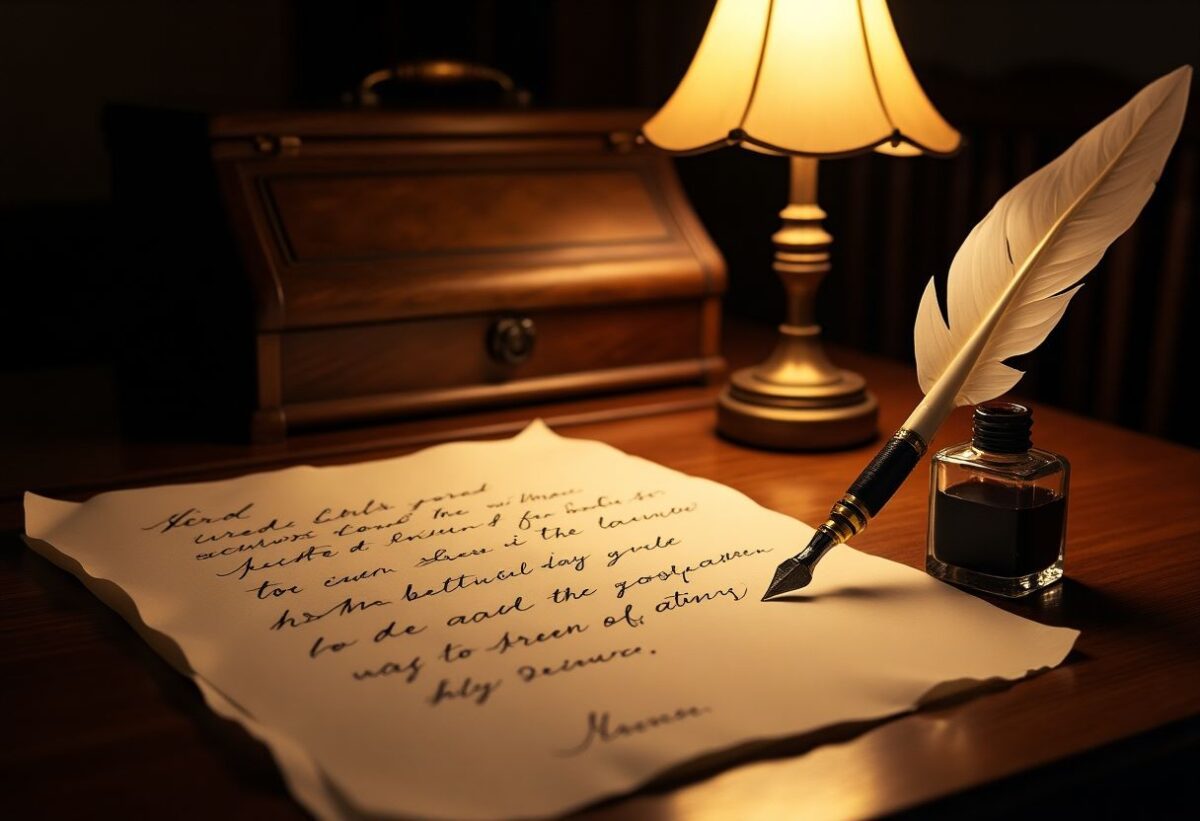
Some messages do not survive the banality of everyday life. Others, carried by a carefully crafted letter, assert themselves and leave a mark. Knowing how to write a letter, whether intended for a loved one or an institution, is not a relic of the past: it is a skill that distinguishes, touches, and persuades. In the face of the proliferation of notifications and the dictatorship of the instantaneous, taking the time to write is to choose density and clarity.
To give weight and accuracy to your words, it is essential to organize your thoughts and avoid the pitfalls that await the overly hasty writer. A letter cannot be improvised. It is constructed step by step, without ever sacrificing sincerity or precision, two pillars that transform a simple sheet into a vector of impact.
The basics for writing a memorable letter
Before playing with tone or adding a touch of originality, you must rely on a solid framework. Here are the essential points to respect to give your letter the structure it deserves:
- Clear structure: Open directly on the subject, develop your arguments or your narrative logically, then conclude with a clear note that invites further action or seals your message.
- Appropriate salutation: The choice of the address formula is never trivial. It should reflect the relationship with the recipient, from the most formal to the most familiar.
- Explicit subject: Present the reason for your letter right away. The reader should grasp your intention from the very first lines, effortlessly.
- Signature: This simple gesture personalizes your correspondence and anchors it in reality. Whether it is a scrawled first name or a full name, the signature carries your commitment.
Style: a matter of context
An effective letter never addresses an abstraction. It targets a specific person, with their expectations, language, and universe. Adapting your style to your interlocutor is to avoid going off-topic and maximize impact.
In front of a friend, let spontaneity speak: an anecdote, a sincere emotion, a knowing wink. The exchange is enriched with shared memories and personal details. Conversely, a professional or administrative context requires sobriety and rigor. The formulas are more structured, and politeness is more pronounced. Relying on a letter example helps to understand expectations and avoid tonal or formal missteps.
Common pitfalls to avoid
Writing is not just about following rules: it is also knowing what to avoid. Many fall into the same traps, often out of excessive zeal or lack of experience.
Here are some frequent pitfalls to keep in mind so that your correspondence does not get lost in the crowd:
- The temptation to say everything: instead of stretching the text, get to the point. Too many details kill attention.
- Clichéd phrases: they weaken the message and erase the personality of your letter. Dare to be precise, even in simplicity.
- Letting mistakes slip by: spelling and grammar are the first judges of your seriousness. Careful proofreading is your best ally.
What makes the difference: the personal signature
To transform a mundane letter into a memorable message, it sometimes takes little, but these details carry weight. A carefully chosen word, a reminder of a shared memory, a spontaneous compliment: these small touches create closeness and warmth, even in the most formal writing.
Some focus on the aesthetics of the medium: paper with a particular texture, colored ink, a decorated envelope, or an evocative stamp. These attentions, far from being gimmicks, testify to the care taken at every stage. The recipient feels it, sometimes well before reading the first sentence.
This act of writing, sometimes anachronistic, remains one of the most powerful ways to forge a connection or open a dialogue. The letter, even in the digital age, does not merely inform: it touches, it convinces, it endures.