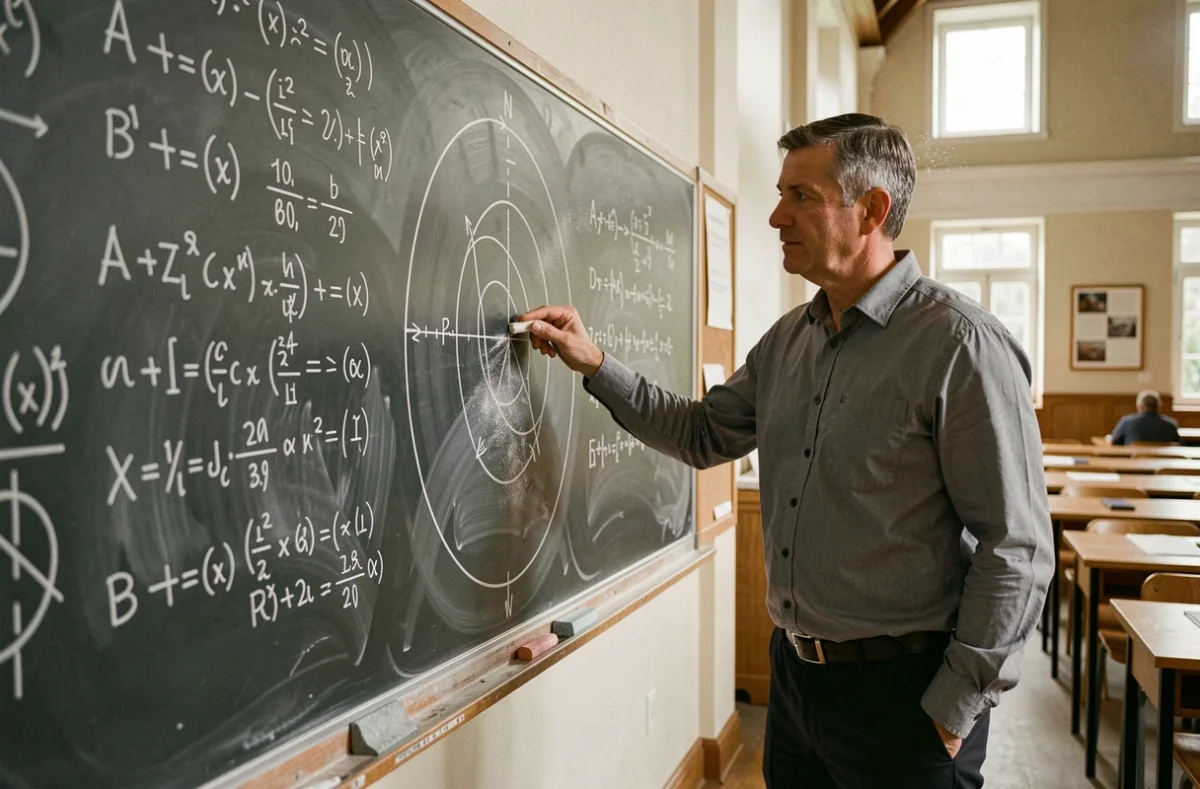
When a sensor is fixed to the edge of an angle grinder and the rotation is started, the sensor describes a perfect circle around the axis. The circular motion and the rotational motion coexist on the same object, but they do not describe the same thing. Understanding this distinction changes the way we analyze a rotating machine, a satellite, or a simple bicycle wheel.
Centripetal force and acceleration: what maintains the circular trajectory
Let’s take a concrete case: a ball attached to a string that is spun at a constant speed in a horizontal plane. The ball follows a circular path. Its speed remains constant, but its velocity vector is constantly changing direction.
This change in direction implies an acceleration, even though the ball is neither speeding up nor slowing down. This centripetal acceleration always points towards the center of the circle. It results from the tension in the string, which acts as the centripetal force here.
To understand the characteristics of circular and rotational motion, it is important to note that circular motion concerns the trajectory of a single point, while rotation describes the overall behavior of a solid around an axis.
In uniform circular motion, the magnitude of the speed remains constant, but the direction varies. The centripetal acceleration depends on the radius of the trajectory and the angular speed. The smaller the radius at the same angular speed, the greater the acceleration, which is well felt when taking a tight turn on a bicycle.
Angular speed and moment of inertia: the quantities of rotational motion
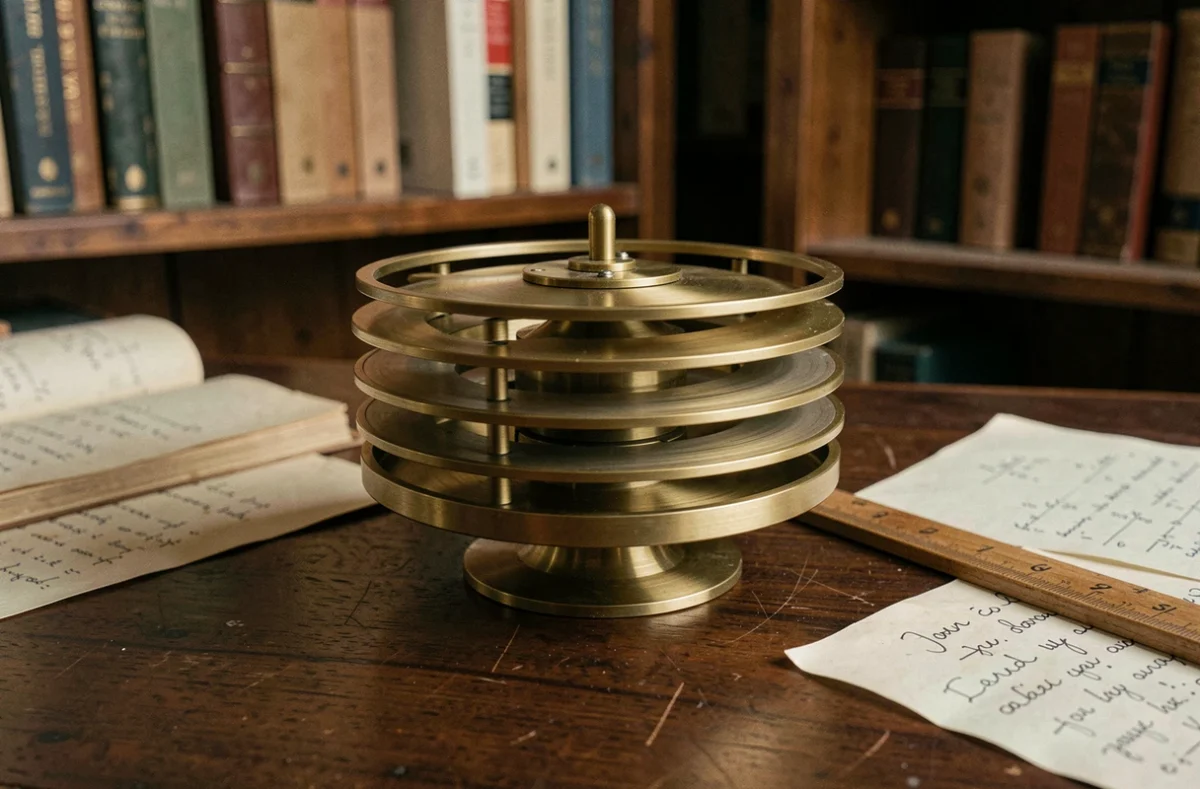
On a potter’s wheel, all points of the disk share the same angular speed. However, a point located at the edge moves much faster than a point near the center. This is the difference between angular quantity and linear quantity.
Angular speed is measured in radians per second. It relates the complete rotation to the time required to accomplish it. When the angular speed varies over time, we refer to angular acceleration, analogous to linear acceleration in translation.
The moment of inertia quantifies a solid’s resistance to any change in its rotation. It depends on the distribution of mass relative to the axis. A solid disk and a ring of the same mass do not have the same moment of inertia: mass concentrated far from the axis increases resistance to changes in rotation.
Recent experiments using modified fidget spinner-type tops and a smartphone show that we can measure angular speed and moment of inertia with common equipment, while addressing the repeatability of measurements and the limits of the model when considering the resisting torque.
Rotating reference frame: why centrifugal force is only apparent
Mentally place yourself on a rotating carousel. You feel a force pushing you outward. For an observer on the ground, this force does not exist: what they see is your body tending to move in a straight line while the carousel brings you back onto a circle.
The centrifugal force is an inertial force related to the non-Galilean reference frame. It only appears when describing the motion from a rotating reference point. In a rotating reference frame, we must also introduce the Coriolis force, which deflects moving objects relative to the reference frame, and sometimes the Euler force when the angular speed varies.
This distinction has practical consequences. In meteorology, the Coriolis force explains the deflection of air masses. In engineering, neglecting these fictitious accelerations in a rotating reference frame can distort the design of a mechanism.
Quantities to distinguish in a rotating reference frame
- The centrifugal acceleration, directed outward, proportional to the radius and the square of the angular speed, exists only for the onboard observer.
- The Coriolis acceleration, perpendicular to the relative velocity vector of the object in the rotating reference frame, comes into play as soon as an object moves within the rotating system.
- The Euler acceleration appears when the angular speed of the reference frame varies over time, for example, when starting or stopping a turntable.
Non-uniform circular motion: when speed changes along the trajectory
Uniform circular motion is an ideal case. In practice, most situations involve a variation in speed along the trajectory. A drill that accelerates at startup or a satellite that corrects its orbit goes through non-uniform phases.
In this case, we add a tangential component, parallel to the trajectory, to the centripetal acceleration vector. This component reflects the change in the magnitude of the speed. The total acceleration results from the vector combination of the two.
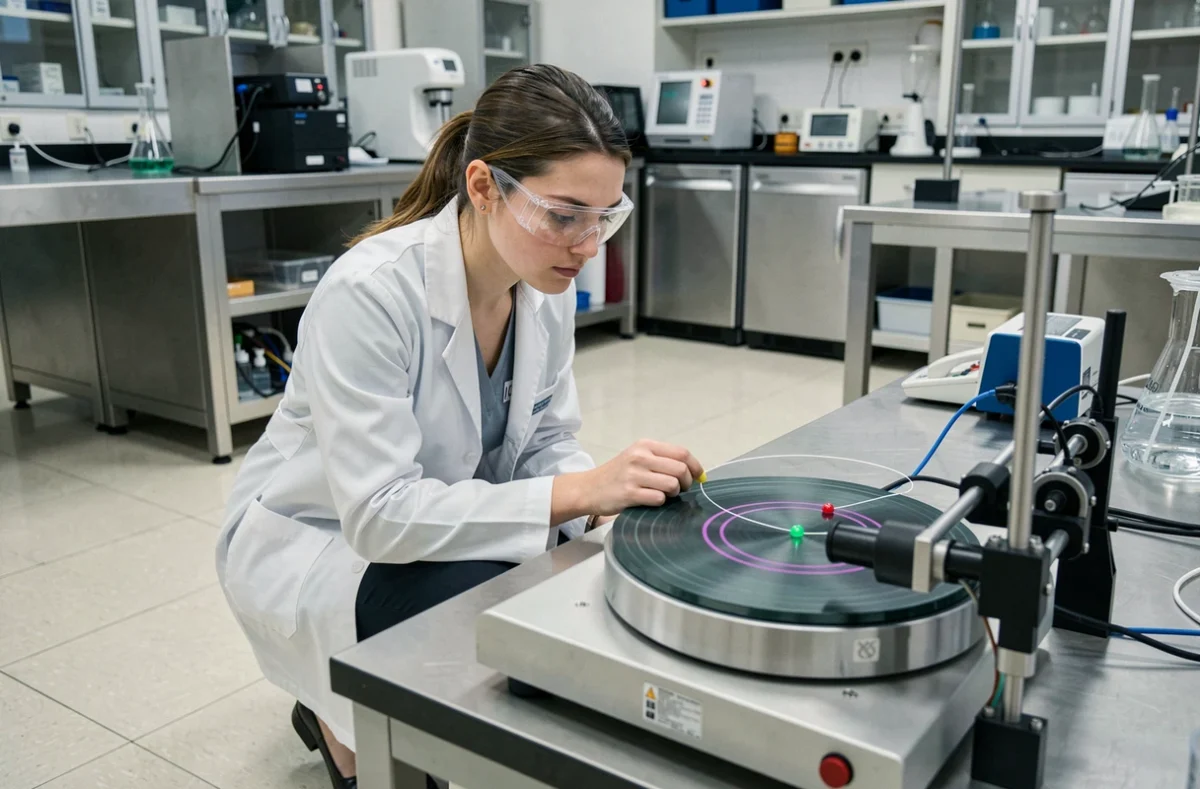
In the field, Arduino-type sensors combined with a structured experimental approach allow for measuring these variations. A study conducted in 2026 with 10th-grade students observed a significant progression in analytical thinking with inexpensive timing sensors and a “predict, observe, explain” approach. Feedback varies on the transfer of acquired knowledge to other contexts, but diagnostic reasoning progresses significantly.
Tools for analyzing variable circular motion
- Chronophotography, which captures successive positions at regular intervals, remains a simple way to visualize acceleration or deceleration on a circle.
- Video tracking software allows for extracting position frame by frame and calculating instantaneous speed along the trajectory.
- Onboard sensors (smartphone accelerometers, Arduino modules) directly measure the centripetal and tangential components of acceleration.
The distinction between circular motion and rotation remains a starting point for any mechanical analysis. The former focuses on a point and its trajectory. The latter takes into account the entire solid, with its mass distribution and moment of inertia. Confusing the two is akin to analyzing a wheel by looking at just one bolt.