A water damage assessment is a technical evaluation carried out by a professional appointed to identify the source of a claim, quantify the damages, and provide the insurer with the necessary elements for calculating compensation. This procedure is not systematic: it is the insurer who decides to initiate it, usually when the estimated amount of damages exceeds a certain threshold or when liability is difficult to establish.
For a simple minor damage, an amicable settlement based on an invoice may suffice. But as soon as the leak affects multiple units in a condominium or the source remains uncertain, the assessment becomes the focal point of the entire claims management.
Remote or on-site assessment: what determines the format of the intervention
The format of the assessment has changed. Several major French insurers now offer a dematerialized assessment for low-impact claims. The principle: a video conference exchange with the expert, during which the insured films the damages or sends photos via a dedicated application.
This format speeds up the processing of the file. The expert can validate certain estimates in real-time, without needing to travel. For the insured, this reduces the time between the declaration and the first evaluation.
Understanding the process of a water damage assessment allows one to anticipate the type of intervention to expect based on the severity of the claim.
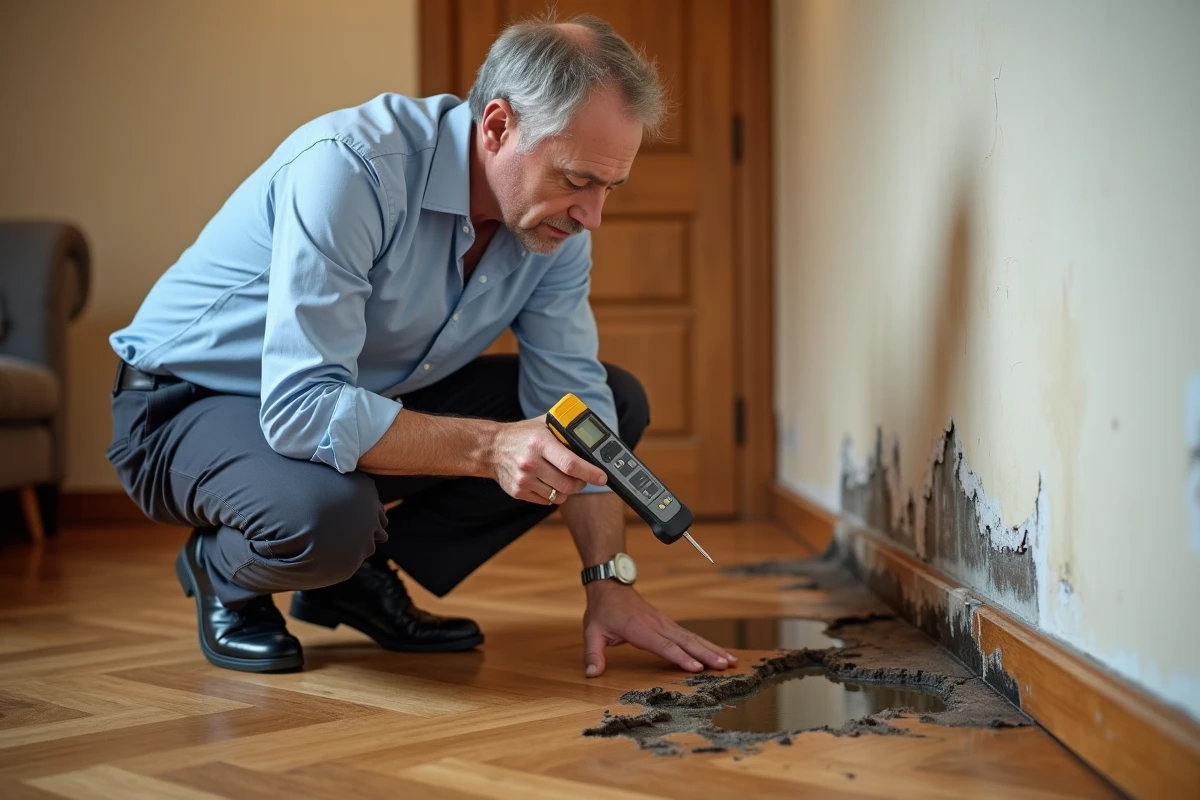
On-site assessments remain the norm as soon as the claim involves structural damage, an unidentified source of the leak, or multiple parties (neighbor, condominium, property manager). In these cases, the expert needs to physically access the affected areas, open partitions, check the condition of the pipes, or measure the humidity level.
Water damage assessment report: what the expert evaluates concretely
The assessment report is not just a simple list of visible damages. The expert produces a structured technical document that serves as the basis for compensation. Its content covers three main areas.
Identification of the source of the claim
Finding the cause of the leak conditions everything else. The expert examines the installations (pipes, seals, fittings, drains) and distinguishes between a leak in private areas and a leak in common areas. This distinction determines who bears the cost of repairs.
In a condominium, the source of the leak establishes the distribution of responsibilities between the owner of the affected unit, the neighbor, and the property manager. A misattribution at this stage can block compensation for months.
Assessment of material damages
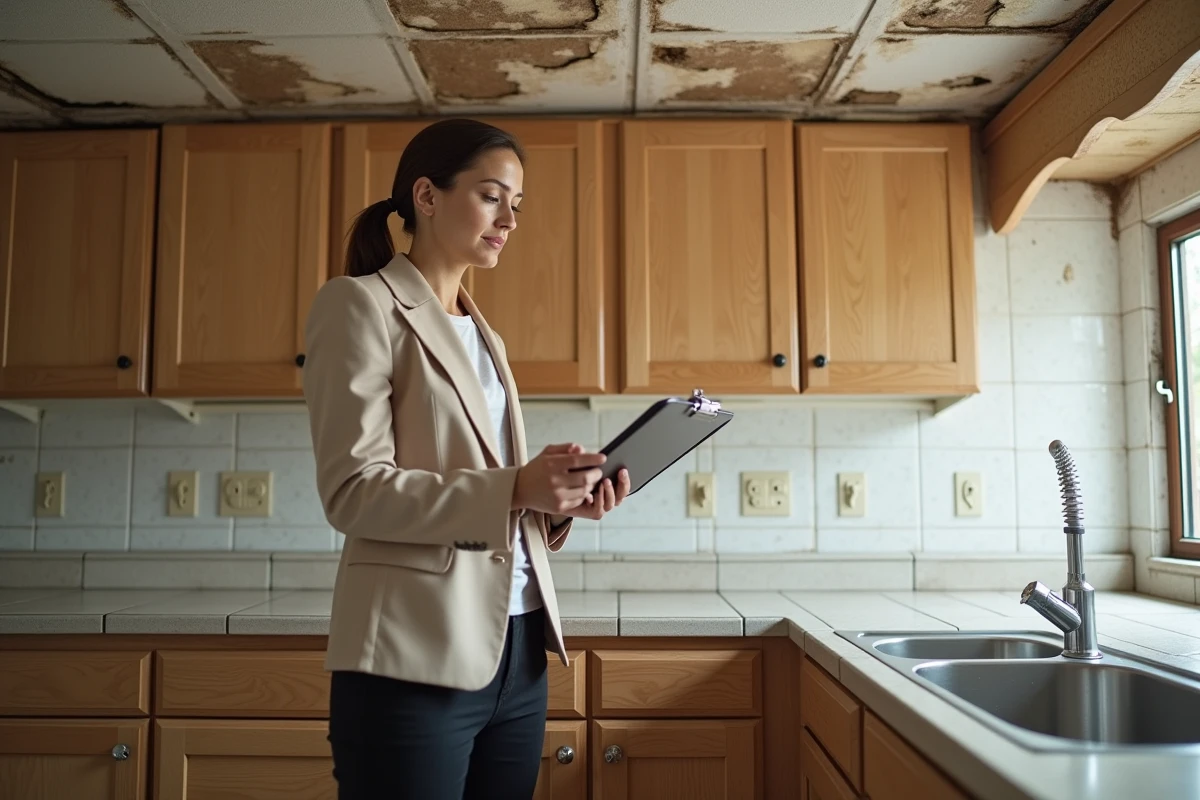
The expert inventories each damaged item: flooring, ceilings, walls, furniture, electrical equipment. He estimates the replacement or repair value taking into account the depreciation of the goods. A floor installed fifteen years ago will not be compensated at the same amount as a new floor.
The elements that the expert expects from the insured for this phase:
- The purchase invoices of the damaged goods, or failing that, photos taken before the claim proving their condition
- Estimates for repair or replacement obtained from contractors
- The amicable water damage report signed by the parties involved, which formalizes the circumstances of the claim
- Any written exchanges with the property manager or neighbor if the claim involves multiple units
Technical recommendations
The report includes recommendations on the work to be carried out. The expert may recommend professional dehumidification, the replacement of porous materials, or the verification of the installation by a certified plumber.
In recent years, the risks of mold and impact on indoor air quality have been more systematically taken into account in the analysis. In older or poorly ventilated housing, the expert may direct towards a healthy building specialist to avoid invisible but lasting damage.
Disputing the assessment report: counter-assessment
The report from the expert appointed by the insurer is not irreversible. If the insured believes that the evaluation underestimates the damages or misidentifies the source of the claim, he can appoint his own expert: this is the counter-assessment.
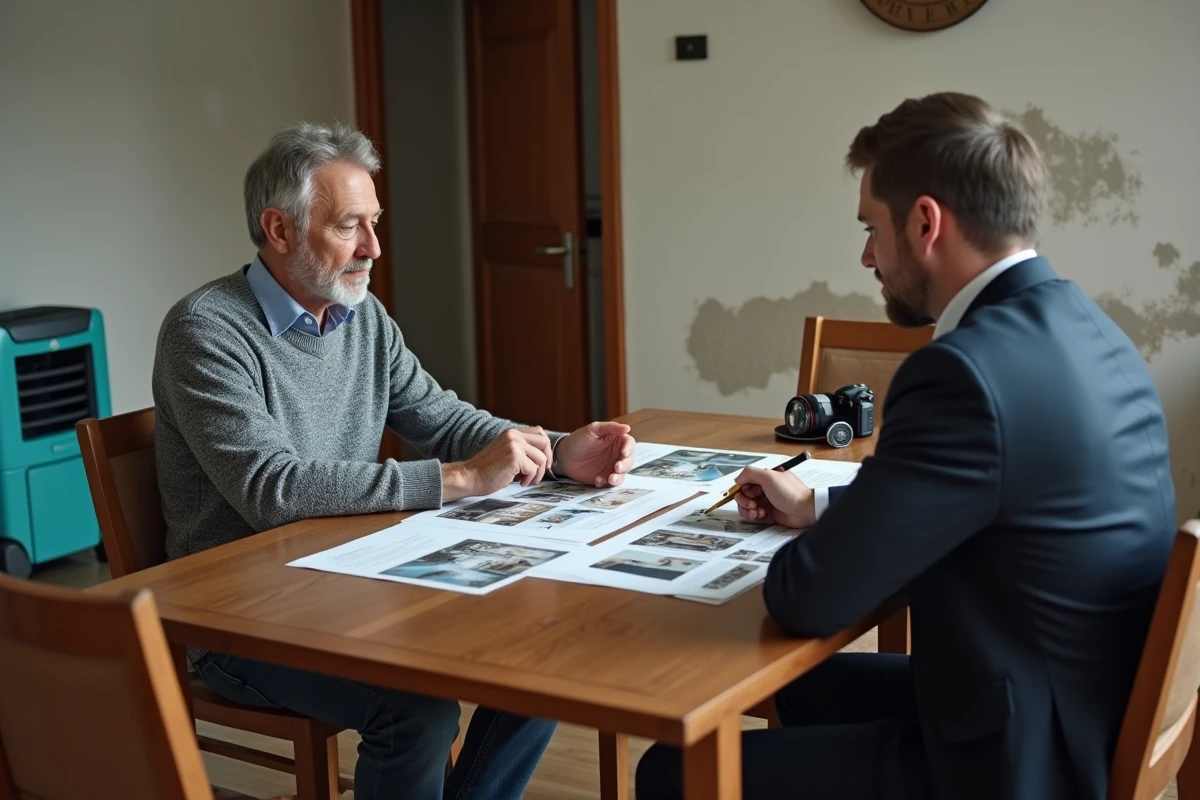
This process has a cost, borne by the insured, unless otherwise stated in the home insurance contract. The counter-expert produces an independent report. If the two reports diverge significantly, the parties may agree to appoint a third expert to make a decision.
Several points deserve attention before initiating a counter-assessment:
- Check if the insurance contract provides for partial or total coverage of the counter-assessment costs
- Gather all additional evidence (timestamped photos, testimonies, detailed estimates) that the first expert may not have included
- Act quickly, as the deadlines for contesting are limited after receiving the report
The counter-assessment does not guarantee a better outcome, but it rebalances the negotiation with the insurer. In cases where the gap between the proposed compensation and the actual cost of repairs is significant, this step often changes the game.
IRSI agreement and claims in condominiums: who manages the file
In a condominium, the management of water damage affecting multiple units follows the rules of the IRSI agreement (Compensation and Recourse for Building Claims). This agreement organizes the coverage between the insurers of the different parties involved.
The central principle: for claims whose amount remains below a certain threshold, it is the insurer of the occupant of the damaged premises (the one suffering the damages) who manages and compensates, and then possibly seeks recourse against the insurer of the responsible party. The insured does not have to identify which insurer should pay.
Above the threshold, a common expert may be appointed to establish a single report accepted by all concerned insurers. This mechanism avoids the multiplication of conflicting assessments in the same building.
The amicable report remains the starting document. It must be completed by all parties and sent to each insurer within the regulatory timeframe. Without this document, the IRSI agreement cannot be properly applied, and the processing of the file is delayed.
A well-documented water damage incident from the first hours, with photos, signed report, and estimates, gives the expert the means to produce a reliable report. It is on this basis that compensation is calculated, whether the claim concerns a studio or an entire building.