When you open your wardrobe at the start of the season, the question isn’t about replacing everything. The real issue is identifying the two or three pieces that will make a difference in your daily life. This season’s men’s and women’s fashion is structured around more defined cuts, rethought materials, and a new constraint: the European textile regulation, which is already changing what brands offer on the shelves.
European textile regulation: what changes concretely in the collections
Legislation is rarely discussed in a fashion article, but this season ignoring it would be a mistake. Since July 19, 2026, large companies can no longer destroy their unsold clothing, accessories, and shoes in Europe, except for exceptions outlined by the regulation. Medium-sized enterprises will be affected starting in 2030.
In practice, this means that brands are producing shorter and better-calibrated series. We can already see this in the autumn-winter collections: fewer references, more frequent restocks, and materials chosen for their durability and recyclability.
The European directive 2025/1892, which came into effect on October 16, 2025, imposes an extended producer responsibility. Each brand now finances the collection, sorting, reuse, and recycling of its products. Contributions are adjusted based on eco-design criteria. This type of documented approach can be found on lefumoirdelamode.com, which tracks the evolution of the French textile sector.
A digital product passport is also being prepared at the European level, even though it is not yet mandatory for clothing. The idea: a QR code on each piece, providing access to its composition, place of manufacture, and end-of-life instructions. Traceability is becoming both a selling point and a legal obligation.
Wide trousers and structured blazers: the cuts dominating the season
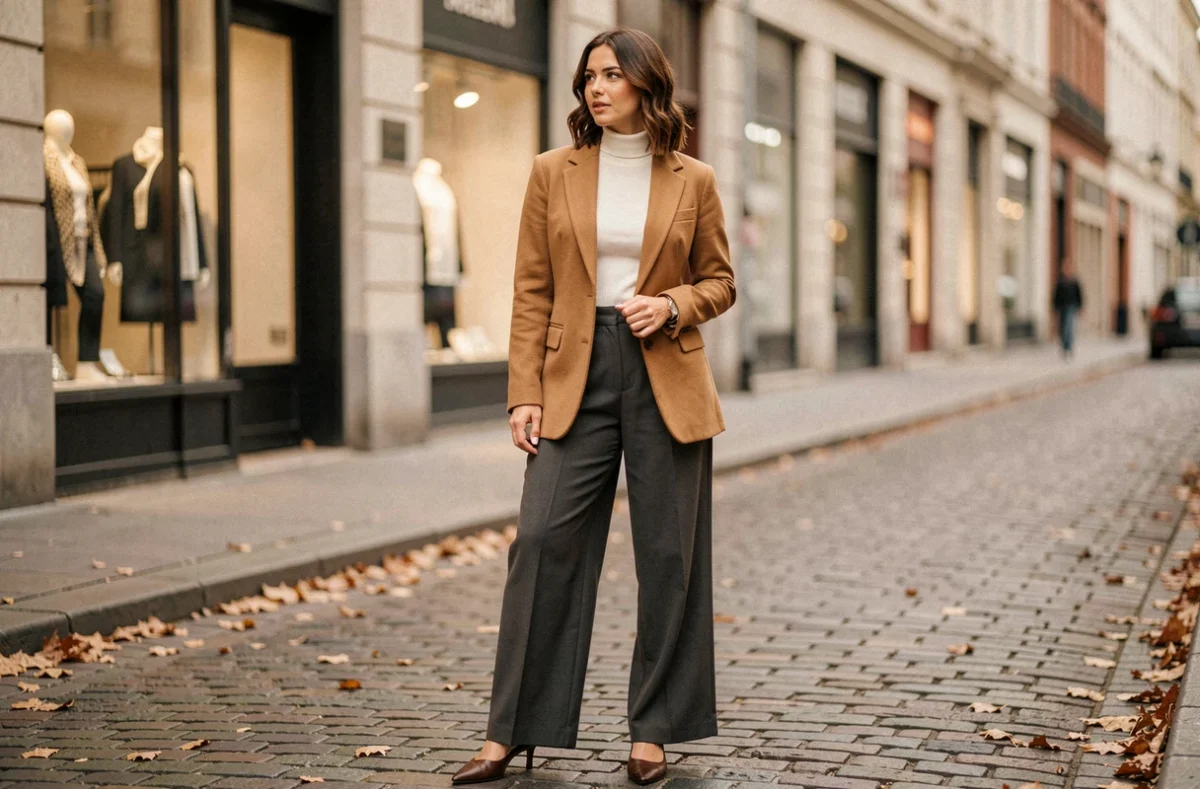
The structured wide trousers remain the most worn cut, for both men and women. They are available in lightweight wool for autumn, in thick cotton for mid-season, with a defined waist and a loose fit that doesn’t resemble joggers. This is the piece that replaces slim jeans in most urban wardrobes.
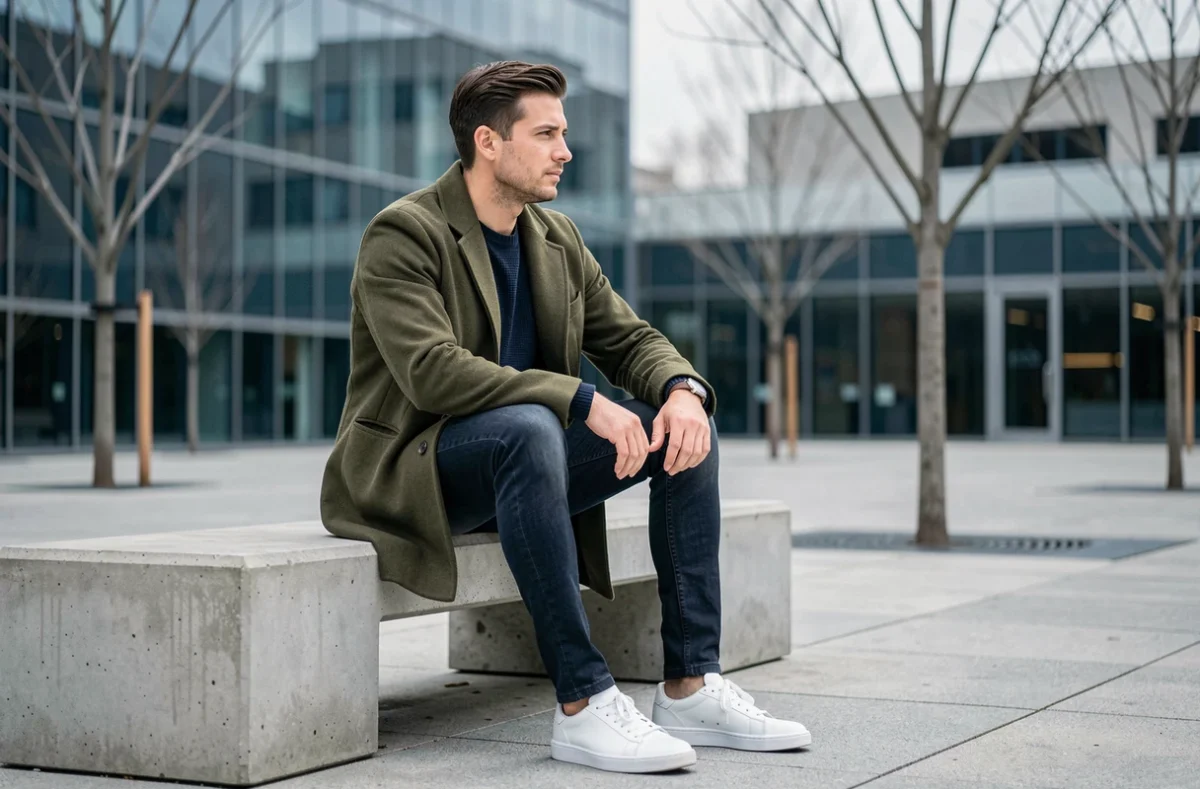
On the men’s side, blazers are returning in a less rigid version. We’re talking about jersey or brushed cotton blazers, worn open over a round-neck t-shirt. The relaxed blazer replaces the technical jacket in the city. The dominant colors are navy blue, anthracite gray, and warmer tones like camel or rust.
For women, the long fluid dress stands out as a central piece. The runways of Milan and Paris have confirmed it: Loewe, Miu Miu, Saint Laurent, and Tom Ford have all showcased it. Paired with minimalist shoes, it works just as well in the office as it does outdoors.
Three pieces to prioritize this season
- A wide trouser in structured material (wool or cotton), straight or slightly flared cut, that holds up from Monday to Sunday
- A blazer in soft fabric, without thick lining, that can be worn like an overshirt on transitional days
- A midi or long dress in fluid fabric, in a bold color (orange, olive green, sky blue) rather than a busy print
Fall-winter fashion colors and materials: what really works
Warm tones dominate this season: burgundy, camel, terracotta, chocolate brown. We also see bright shades used as accents (butter yellow, bright orange), especially on accessories or outerwear.
Leather is making a massive comeback, in a finer and softer version than before. Short jackets, midi skirts, fitted trousers: leather is worn as a standout piece, not as a total look. Opinions vary on this point, with some finding that fine leather is less durable in use, but the comfort of wearing it remains superior to the thicker versions from previous seasons.
Tartan and animal prints persist, especially in accessories (scarves, bags). On clothing, we observe a return to solid textures with relief: twisted knits, corduroy, boiled wool. The trend favors material over pattern.
Unisex style and shared wardrobe: a sustainable fashion trend
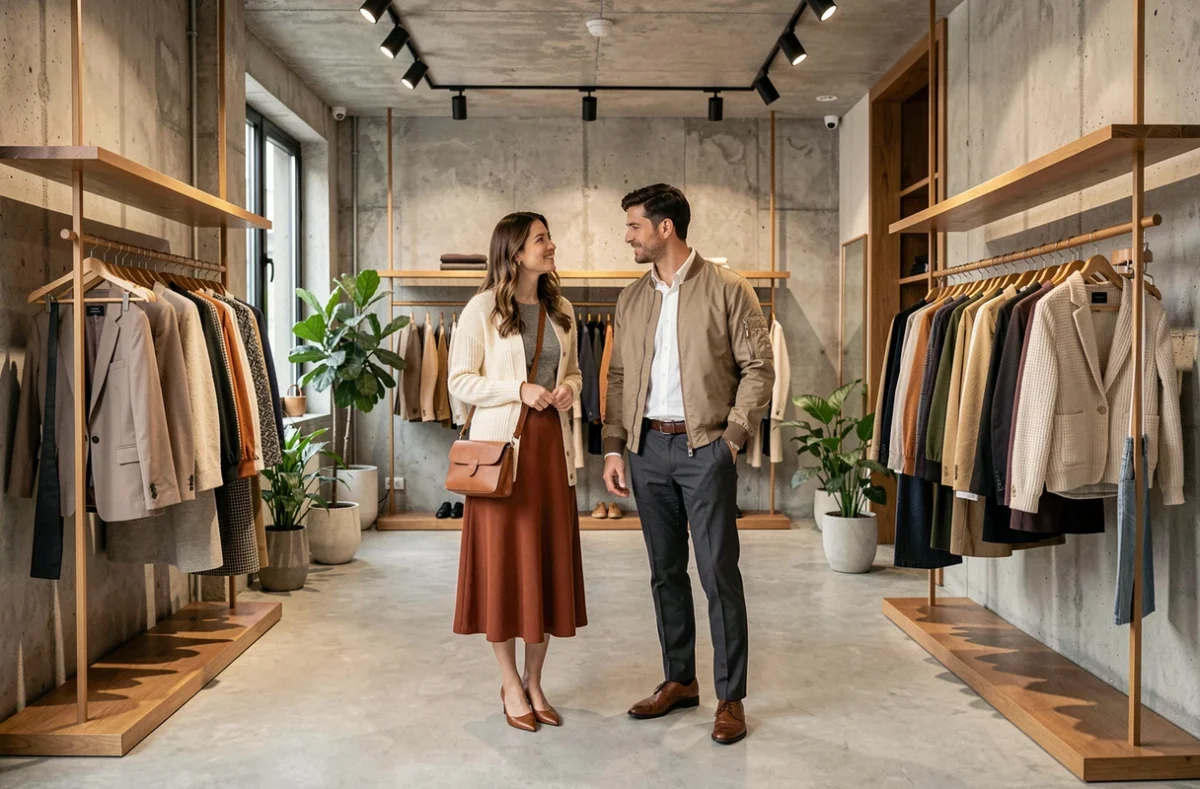
It is noted that more and more pieces are designed without gender distinction. The oversized sweater, the short trench, the cargo pants in thick canvas: these basics are found in both men’s and women’s sections without significant cut modifications.
This is not just a marketing effect. Regulatory constraints are pushing brands to reduce the number of references. Offering unisex pieces allows to halve the stock in certain categories, which directly responds to the ban on destroying unsold items.
To create a coherent look this season, start with a neutral base (wide trousers, plain t-shirt) and add a single standout piece: a colorful blazer, a leather jacket, or a patterned accessory. Layering remains the guiding principle, but with fewer layers than before. Two layers are sufficient in most cases.
What to keep, what to avoid
- Keep: wide trousers, soft blazers, fine leather, warm colors as a base, and bright accents
- Avoid: total printed looks, four-layer layering, pieces too marked by a single season
- Watch: the digital product passport, which could become a concrete choice criterion in a few seasons
This season’s men’s and women’s fashion trends boil down to a more streamlined wardrobe, with versatile pieces and materials designed to last beyond a single winter. European regulation is accelerating this movement, and current collections already bear its mark.