At night, a mysterious world awakens, where nocturnal birds take over the celestial realm. These winged creatures, often shrouded in an aura of mystery, have developed means of communication that are as fascinating as they are effective for navigating the darkness. Their piercing calls or subtle whispers resonate in the nocturnal silence, creating a soundscape that intrigues scientists and birdwatching enthusiasts. But what are they saying? How do these sound signals influence their hunting, mating, and social behaviors? These questions open the door to an exciting exploration of the little-known world of nocturnal avian communication.
Scientific Exploration of Nocturnal Communication in Nocturnal Birds
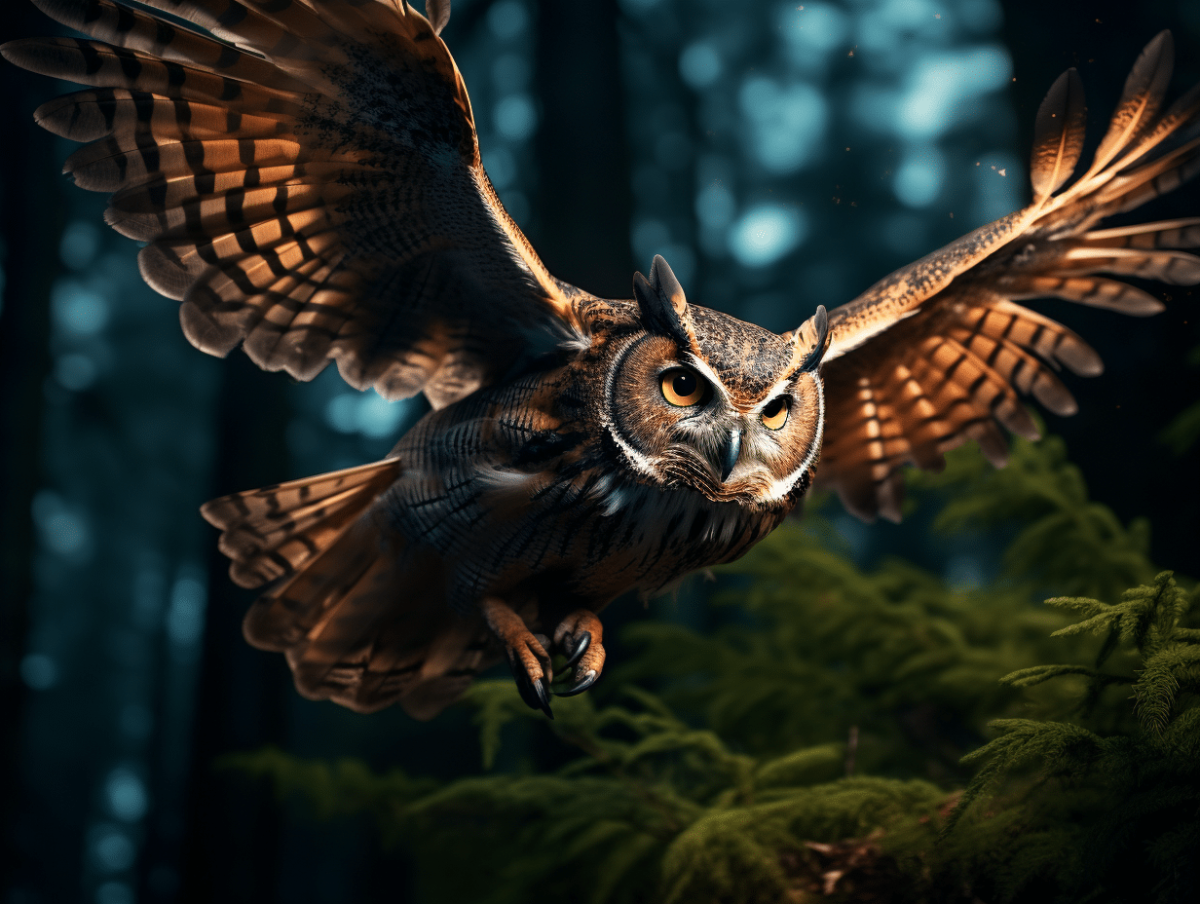
The owls and hawks, silent actors of the night, fascinate with their ability to move with disconcerting ease in the dark. The full moon, like an illuminated stage, influences the behavior of these nocturnal raptors, modulating their exchanges and hunting activities. Observe the silent flight, a result of meticulous evolution, where special feathers reduce turbulence and noise, allowing for a stealthy approach to their prey.
The melodious song and the call of the owl, unique to each species, constitute a form of communication between species, serving both to call a mate and to establish territorial boundaries. These acoustic adaptations are keys unlocking the secrets of prey localization in the veil of night. Scientists, intrigued, study these sound mechanisms that seem to be adjusted according to forest density and sound reverberation.
Nocturnal dances, on the other hand, are aerial ballets that unfold in the starry sky. These courtship rituals, where owls and hawks swirl around trees, are not only a visual spectacle but also a demonstration of acoustic and physical abilities. This secret language of owls, these hoots that traverse the night, confirm the extent of their adaptability and the complexity of their social life, offering researchers new perspectives on nocturnal animal communication.
Ecological Implications and Conservation of Nocturnal Birds
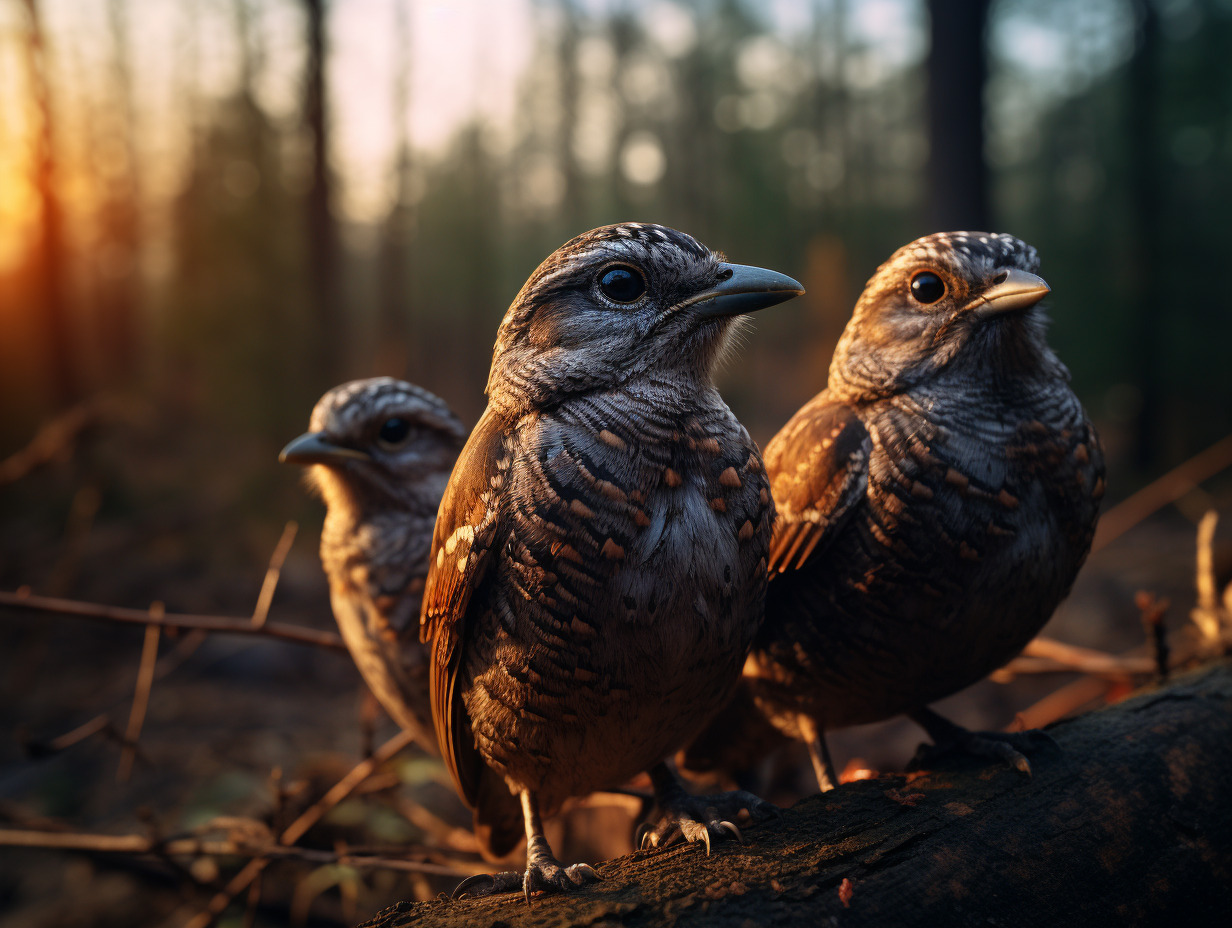
Nocturnal birds, formidable predators thanks to their sharp night vision, play a fundamental role in the balance of ecosystems. Their physiological adaptations, which allow them to regulate populations of rodents and insects, testify to the finesse of evolution serving nightlife. Their preservation is essential, both for biodiversity and for maintaining the ecological functions they fulfill.
These nocturnal raptors, wrapped in wisdom and mystery, are embedded in our cultures as powerful cultural symbols. They embody, in many beliefs, messengers of the spirit world, guardians of knowledge, and participate in numerous traditional rituals. The cultural value of owls and hawks thus enriches the necessity of their conservation.
However, the growing threat of light pollution disrupts the hunting habits and life cycles of these animals. The veil of night, once protective, is now eroded by the intrusion of artificial lighting, compromising the survival of these species. Be aware of this reality and work towards reducing these light nuisances to preserve the fascinating world of owls and other nocturnal raptors.